In the Silence Between Prayers: Holding Onto Faith When God Feels Far Away
When the Heavens Seem Brass
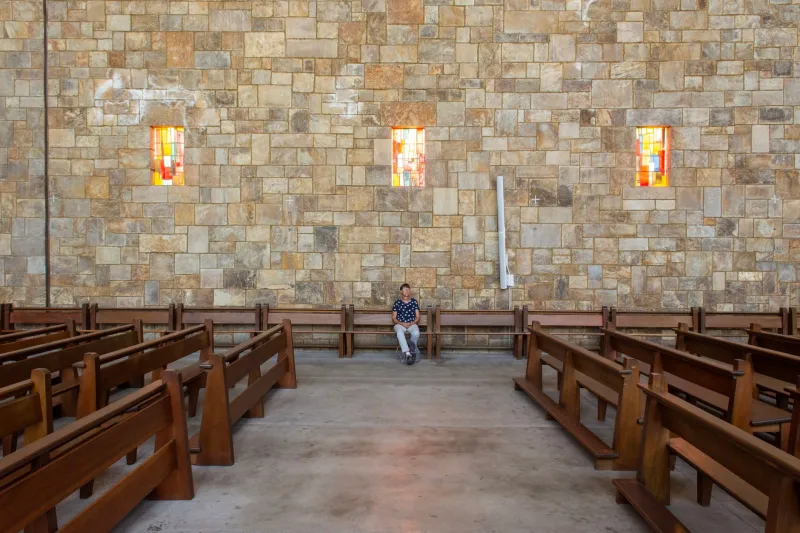
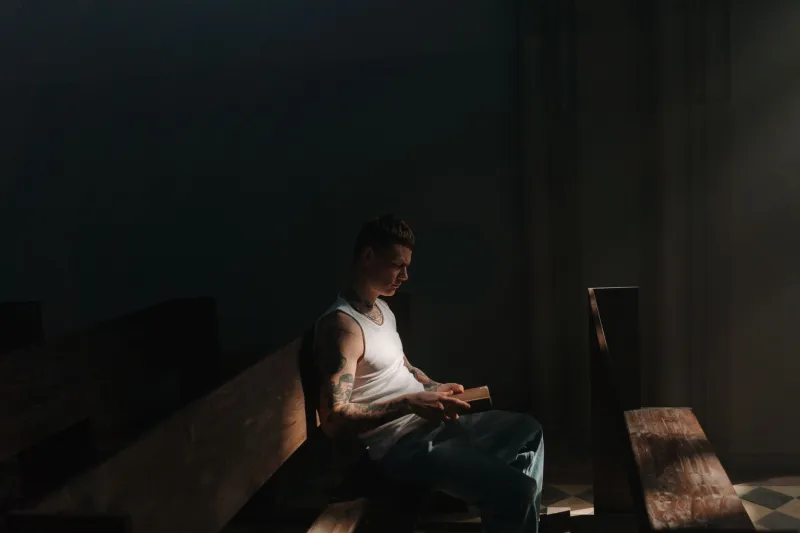
Every committed believer knows the experience, even if they rarely speak of it aloud. You kneel in prayer with earnest expectation, and the room feels ordinary. You open your Bible searching for comfort, and the words lie flat on the page. The God who once felt as near as breath now seems to have withdrawn behind a curtain you cannot part. Theologians have long called this condition spiritual aridity — and far from being a sign of failed faith, it has been the common inheritance of some of Scripture's most devoted servants.
For many Christians in the Orlando area, this interior silence has arrived not in a vacuum but amid genuine crisis: the death of a spouse, a diagnosis that rearranged the future, a depression that refused to lift despite medication and counseling and corporate worship. These are not theoretical struggles. They are the lived realities of men and women sitting in our pews every Sunday, carrying weight that polite church culture sometimes makes difficult to name.
Central Christian Doc Orlando believes that authentic faith must have room for honest wrestling. This article does not offer easy resolution. It offers company.
The Biblical Precedent for Holy Desolation
The impulse to interpret spiritual dryness as spiritual failure is understandable but theologically unfounded. Consider the Psalms — those ancient songs that the church has prayed for three millennia. Psalm 88 is perhaps the most unrelenting lament in all of Scripture. Its author, Heman the Ezrahite, cries out: "I am overwhelmed with troubles and my life draws near to death... darkness is my closest friend." Remarkably, the psalm ends without resolution, without a triumphant turn toward joy. It simply ends in darkness. The Holy Spirit, in His wisdom, saw fit to preserve that unresolved anguish within the canon.
Job, whom God Himself described as blameless and upright, spent the bulk of his biblical narrative convinced that God had abandoned him to suffering without cause. Elijah, fresh from one of the most dramatic miracles in Israel's history, collapsed beneath a juniper tree and asked to die. Jeremiah, the weeping prophet, cursed the day of his birth. The mystic tradition within Christianity — from John of the Cross coining the phrase "dark night of the soul" to C.S. Lewis's raw grief journal following his wife's death — confirms that seasons of felt divine absence are not aberrations in the life of faith. They are, in some mysterious sense, part of it.
Voices From Central Florida
Margarita, a longtime member of a congregation in the Orange County area, lost her youngest son to an overdose three years ago. She describes the months that followed as a period in which she continued attending church, continued mouthing the words of hymns, continued serving in the food pantry — all while feeling, as she puts it, "like I was performing faith I couldn't actually feel."
"I kept waiting for the breakthrough moment," she recalls. "The sermon that would crack me open. The prayer where I'd feel His arms around me again. It didn't come quickly. What came instead were small things — a neighbor who left soup on my porch, a Scripture verse my granddaughter read aloud that I'd heard a hundred times but suddenly landed differently. Looking back, I think God was present the whole time. I just couldn't perceive it the way I expected to."
David, a deacon at a church in the Apopka corridor, describes a two-year battle with clinical depression during which he questioned not only God's presence but God's existence. "I felt enormous shame," he says. "Here I was, supposed to be a spiritual leader, and I couldn't pray without feeling like I was talking to a wall. My pastor was the first person I told, and he didn't flinch. He said, 'David, the psalms are full of men like you.' That was the beginning of something."
Their stories, distinct as they are, share a common thread: the silence was not the end of their faith. It was, however uncomfortably, a passage through it.
What Theology Offers — and What It Cannot
Doctrine matters in these seasons, even when it cannot be emotionally felt. The orthodox Christian understanding of God's omnipresence — His unchanging commitment to be with His people regardless of subjective perception — provides a theological anchor when experiential faith is unavailable. The promises of Scripture do not expire during seasons of dryness. God's character does not shift with our moods or our crises.
At the same time, the church does a disservice to suffering believers when it rushes too quickly to doctrinal reassurance. Job's friends were not wrong in their theology so much as they were wrong in their timing and their tone. Sometimes the most faithful pastoral act is to sit in silence alongside someone, as Job's friends did before they began to speak, and to resist the urge to explain away pain that deserves to be witnessed.
Professional Christian counseling, which integrates clinical care with biblical truth, has proven invaluable for many Orlando-area believers navigating depression alongside spiritual dryness. Faith and mental health are not competing categories. Addressing one frequently opens space for the other to breathe again.
Practices That Sustain Without Forcing
For those walking through a season of spiritual silence, several disciplines — practiced without pressure or performance — have helped believers in our community maintain connection to God even when the connection feels broken.
Lament as liturgy. Rather than suppressing grief or confusion, giving it structured expression through the Psalms of lament or written prayer can transform private anguish into an act of worship. Telling God that you cannot find Him is still, at its core, an address to God.
Embodied community. When interior faith falters, the gathered church carries the believer. Showing up — even when worship feels hollow — places the struggling Christian within the body's collective faith, which can sustain what the individual cannot currently generate alone.
Reduced expectations in devotion. Spiritual directors within the Christian tradition have long advised that seasons of dryness call not for more intense spiritual effort but for gentler, less striving forms of prayer — quiet sitting, brief Scripture reading, simple acknowledgment of God's presence without demanding a felt response.
Trusted confession. Naming the struggle to a pastor, a mature believer, or a Christian counselor removes the compounding burden of isolation. Shame thrives in secrecy. Community, even small community, diminishes it.
The God Who Waits in the Dark
Jesus, in His final hours, cried out the opening line of Psalm 22: "My God, my God, why have you forsaken me?" The Son of God entered the experience of divine abandonment so thoroughly that He voiced it from the cross. This is not incidental. It means that the darkest interior place a believer can inhabit has already been entered by Christ. He is not waiting at the edge of the darkness, beckoning us toward the light. He is present within the darkness itself.
For those in Orlando and beyond who find themselves in that dark place tonight — still attending, still trying, still waiting for a silence to break — the witness of Scripture and of believers across centuries offers this: you are not abandoned. You are not failing. You are, in ways you may only understand in retrospect, being held.