Pews Across the Ages: How Central Florida Churches Are Uniting Generations Divided by More Than Music
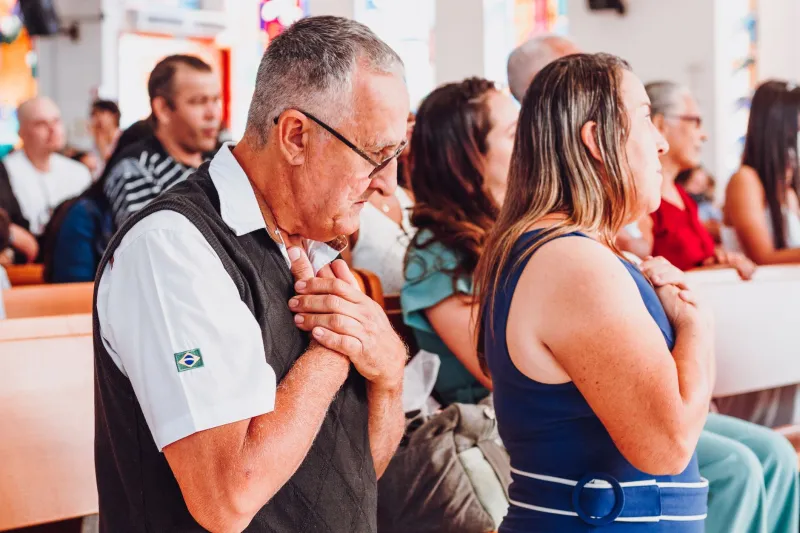
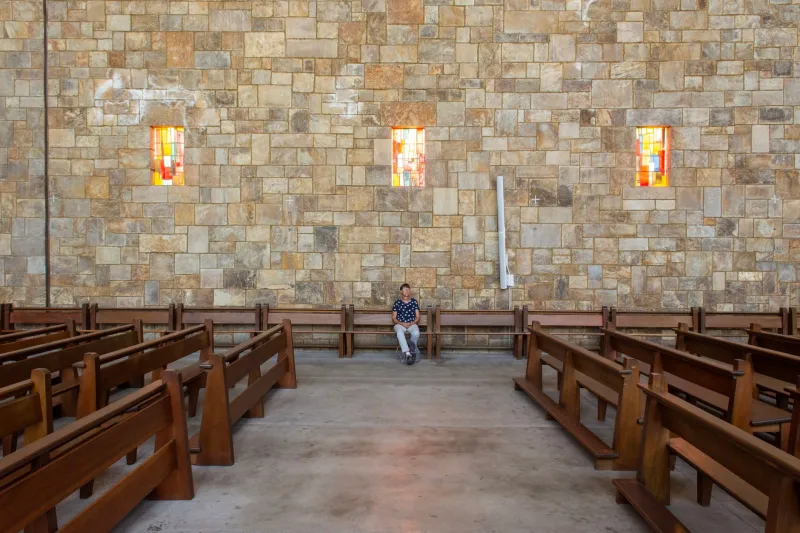
Walk into almost any Orlando-area church on a Sunday morning and you will observe a quiet tension that few congregations openly discuss. In one section of the sanctuary, longtime members in their sixties and seventies hold worn hymnals and feel the weight of decades of faithful attendance. A few rows back, a millennial couple checks the lyrics on a projected screen, their toddler between them. Near the back, a college student scrolls through a Bible app, present in body but perhaps uncertain about whether this community is truly meant for someone like her.
This is not a crisis unique to Central Florida. But it is playing out here with particular urgency, in a region defined by rapid demographic change, transient populations, and a religious landscape as diverse as its theme parks. And the churches navigating it most thoughtfully are discovering that the generational divide is about far more than worship style.
A Divide Rooted in Different Worlds
To understand what separates Baby Boomers, Millennials, and Generation Z in the pew, one must first understand what separates them outside of it. Boomers, broadly speaking, came of age in an era when institutional trust was still intact and church attendance was a cultural norm as much as a personal conviction. Their faith was often formed through stable family structures, denominational loyalty, and a shared moral framework reinforced by the surrounding culture.
Millennials, by contrast, entered adulthood during a period of profound institutional skepticism. The financial crisis, political polarization, and a string of high-profile church scandals shaped a generation that values authenticity over performance and relationships over programs. They are not necessarily less devout — but they are considerably more discerning about where and how they invest their spiritual lives.
Generation Z, now entering adulthood in earnest, has never known a world without social media, perpetual connectivity, or the ambient anxiety those conditions produce. They are, by multiple measures, the most spiritually curious and simultaneously the most institutionally skeptical generation in recent memory. They are drawn to meaning, to justice, and to communities that demonstrate integrity — but they are quick to disengage when those standards go unmet.
"You cannot reach a twenty-two-year-old the same way you reach a sixty-two-year-old, and pretending otherwise has cost the church an enormous amount," observed one Central Florida ministry leader who works extensively with young adults. "But the answer is not to abandon what the sixty-two-year-old needs either. It is to build something wide enough to hold both."
The Worship Wars, Revisited
The debate over worship style — acoustic hymns versus contemporary praise bands, liturgical structure versus free-form expression — has occupied evangelical churches for decades. Many Orlando congregations have settled into a blended model that attempts to satisfy everyone and sometimes fully satisfies no one.
But church leaders who have moved beyond this impasse tend to share a common insight: the format of worship matters far less than the theology it carries and the sincerity with which it is offered. A congregation that sings a centuries-old doxology with genuine reverence communicates something powerful. So does one that engages modern instrumentation as a vehicle for authentic praise. The failure mode, in both cases, is performance — music chosen to attract or retain a demographic rather than to honor God.
"We stopped asking what style our people prefer and started asking what kind of worshippers we want to form," said a worship director at a multi-site Orlando church. "That reframe changed everything about how we make those decisions."
Several congregations in the metro area have also experimented with intentionally multigenerational worship teams — placing older instrumentalists alongside younger ones, pairing traditional choir voices with contemporary vocalists. The result, leaders report, is not always musically seamless. But it communicates something that no production quality can replicate: that this community genuinely belongs to all of them.
Theology, Social Justice, and the Generational Fault Lines
Perhaps the more sensitive territory lies not in worship style but in theological emphasis. Younger evangelicals, including many who hold orthodox convictions, often prioritize the church's engagement with poverty, racial reconciliation, environmental stewardship, and human dignity in ways that older congregants sometimes perceive as a departure from doctrinal priorities.
Older members, meanwhile, may feel that the church's historic commitments to biblical authority, sexual ethics, and sanctity of life are being quietly minimized to accommodate cultural sensibilities. Both concerns, when handled poorly, produce the same outcome: people leaving.
Churches that are threading this needle successfully tend to do so by rooting social engagement firmly in biblical theology rather than presenting it as a concession to contemporary pressure. When care for the poor is preached from Proverbs, Isaiah, and the Sermon on the Mount, it carries a different weight than when it arrives as a political talking point. When convictions about human dignity are held consistently across every category of human life, they gain credibility with generations that are quick to detect selective application.
"The young people in our congregation are not asking us to abandon Scripture," noted one senior pastor whose church spans a wide age range. "They are asking us to take it more seriously — all of it. That is a challenge worth accepting."
Practical Strategies Orlando Churches Are Employing
Beyond theology and worship, several structural practices are helping Central Florida congregations bridge the generational gap in concrete ways.
Intentional mentorship programs — pairing older members with younger ones for regular, informal relationship — have proven particularly effective. These are not formalized discipleship curricula so much as sustained, unhurried human connection: shared meals, shared service, and shared conversation about faith across the decades.
Multigenerational small groups, rather than age-segregated ones, offer another avenue. When a retired schoolteacher and a twenty-six-year-old software developer study the same Scripture passage together, both bring perspectives the other would not encounter alone. The richness of that exchange can quietly dissolve the assumptions each carries about the other.
Churches are also reconsidering how they deploy technology — not as a concession to younger preferences but as a genuine tool for community formation. Well-designed digital communication, accessible sermon archives, and thoughtful social media presence can extend the congregation's reach without replacing the irreplaceable value of physical presence and embodied worship.
The Deeper Unity Beneath the Differences
For all the genuine complexity of the generational divide, the churches navigating it most gracefully tend to return to a simple conviction: what unites believers across age, background, and cultural preference is more fundamental than what distinguishes them. The same Gospel that sustained a congregation through the upheavals of the 1960s is the Gospel that a Gen Z college student needs today. The same risen Christ who is the anchor of one generation's faith is the answer to another generation's searching.
Orlando's churches have an opportunity — and a responsibility — to demonstrate that this unity is not merely aspirational. It is possible, it is worth pursuing, and it begins with the willingness to make room for one another at the same table.