From Adversaries to Altar: How Orlando Believers Are Turning Enmity Into Intercession
There is a particular kind of spiritual courage required to pray for someone who has genuinely wronged you. It is one thing to mouth the words in a Sunday morning liturgy, safely insulated from the person in question. It is another matter entirely to kneel beside that individual, voice their name before God, and mean it. Yet across Orlando's congregations, this is precisely what is happening — not as a performance of piety, but as the fruit of long, costly obedience to a command that has never stopped being difficult.
"Forgiveness is a decision," says Pastor Marcus Webb of a mid-sized evangelical congregation in the Conway neighborhood of Orlando. "But reconciliation is a process. What I've witnessed in this community is people committing not just to the decision, but to the process — even when it costs them something."
The stories that follow are not exceptional in the sense of being rare. They are exceptional in the sense of being extraordinary — evidence that the reconciling power of the gospel is not merely theological language, but lived reality.
The Business Partner Who Became a Brother in Prayer
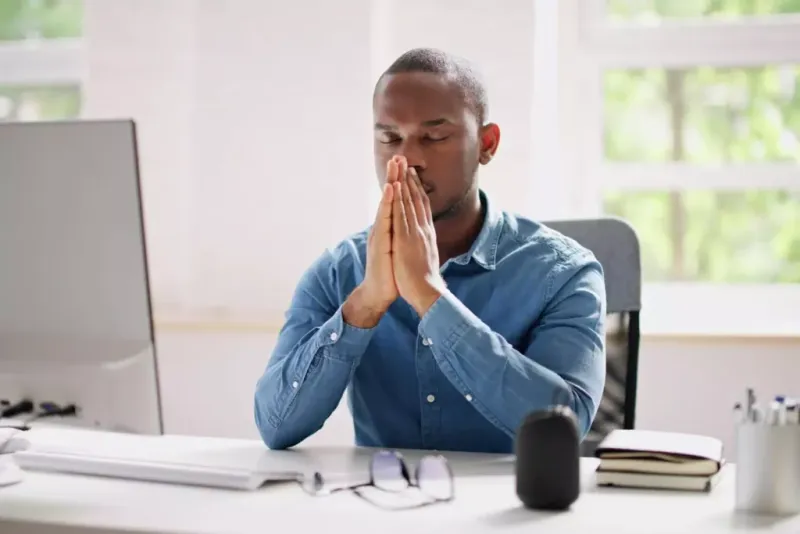
David Okonkwo spent three years convinced that his former business partner, a man he had known since college, had deliberately defrauded him of a substantial financial stake in a shared venture. The dissolution of that partnership left him not only with financial loss but with a bitterness he describes as having "taken up residence" in his soul.
"I was functional," Okonkwo recalls. "I went to church. I tithed. I served on the deacon board. But there was this locked room inside me that I wouldn't let God into because I knew what He would ask me to do."
The turning point came during a men's retreat hosted by his church in the Oviedo area. A session on Matthew 5:23-24 — the passage in which Christ instructs His followers to leave their offering at the altar and first be reconciled to a brother — landed with what Okonkwo calls "surgical precision."
"I realized I had been presenting offerings to God with a locked room in my chest. I wasn't fully there. Part of me was still standing outside the door of that grievance."
What followed was not swift. Okonkwo made the first contact through a letter — carefully worded, pastorally guided, theologically grounded. His former partner responded. Over the course of eighteen months, the two men met, argued, wept, and eventually arrived at a place of mutual acknowledgment. Today they are part of the same weekly prayer group, interceding together for their families, their neighborhood, and each other's spiritual growth.
"I don't know that I would call us close friends," Okonkwo admits. "But I can say, with full honesty, that I love him. And that feels like a miracle."
Ideological Fracture and the Long Road Back
Not every rupture is born of financial betrayal or personal offense. Some of the deepest fractures in Orlando's faith communities have formed along ideological lines — political, theological, and cultural disagreements that calcified over years into something resembling genuine enmity.
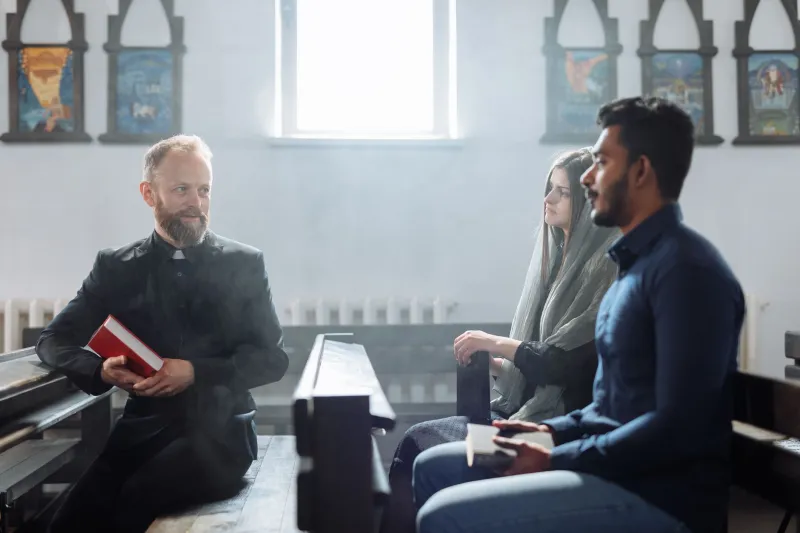
Reverend Carol Simmons, who has pastored a multiethnic congregation in the Pine Hills corridor for over a decade, has witnessed this dynamic repeatedly. "I've seen people who shared communion together for years become adversaries over issues that, while real, were never meant to be identity-defining fractures," she says. "The enemy knows exactly where to press."
One of the most striking reconciliation accounts she has shepherded involved two longtime congregants — a woman who had been deeply involved in community activism and a man whose views on those same issues were sharply divergent. Their conflict had become, over time, a source of faction within the congregation itself. Others were choosing sides.
Reverend Simmons did not attempt to resolve the ideological disagreement. Instead, she invited both individuals into a structured process she calls "covenanted listening" — a series of guided conversations grounded in Scripture, facilitated by a neutral elder, with the explicit goal not of reaching consensus but of restoring dignity to the relationship.
"I told them both: you don't have to agree. You have to love. And you cannot love someone you refuse to truly hear."
The process took four months. It did not produce ideological alignment. It produced something arguably more durable: a mutual commitment to pray for one another by name, weekly, regardless of where their convictions diverged. Both individuals remain active in the congregation. Both, by their own account, have become better listeners and more careful thinkers as a result of the process.
The Theology of the Turned Cheek
Pastor Webb is careful to distinguish between what he calls "performative reconciliation" and the genuine article. "There is a temptation in Christian community to rush people toward a handshake and a declaration of peace because it makes everyone more comfortable," he says. "But that is not reconciliation. That is conflict management with a Scripture verse attached."
True reconciliation, he argues, requires what the New Testament calls katallagē — a complete change in the relationship's fundamental orientation. It is not the suppression of grievance but the transformation of it. And that transformation, in virtually every account gathered for this article, required sustained, intercessory prayer as its primary vehicle.
"When you begin to pray for someone — genuinely pray, not cursing them with religious language — something shifts in you," Webb explains. "You cannot consistently bring a person before a holy God in intercession and maintain the same contempt for them. The act of prayer is itself a reconciling force."
This insight is echoed by Dr. Yvonne Castillo, a licensed Christian counselor who works extensively with Orlando-area congregations on conflict resolution. "Prayer does something neurological as well as spiritual," she notes. "It moves the other person from the category of 'threat' to the category of 'beloved of God.' And once that shift occurs, the entire emotional architecture of the relationship becomes available for rebuilding."
What the Church Owes Its Community
For Orlando's faith communities, these individual stories carry a broader implication. A city as diverse, politically charged, and socially complex as Orlando generates fractures constantly — between neighbors, colleagues, family members, and fellow believers. The question the church must answer is whether it possesses the theological resources, the pastoral infrastructure, and the communal will to serve as a genuine site of reconciliation.
Reverend Simmons believes it does — but only if congregations are willing to do the unglamorous work of walking people through conflict rather than around it. "We want to be known as a community of grace," she says. "But grace that has never been tested by genuine offense is just sentiment. The real thing is forged in difficulty."
David Okonkwo, reflecting on the years he spent carrying his bitterness into the sanctuary, offers a quieter conclusion. "I used to think forgiveness was something I did for the other person," he says. "Now I understand it was something God was doing in me. The other person was almost incidental. God was after my locked room."
That room, by his account, is open now. And from inside it, he prays — for his family, for his city, and for the man who once cost him more than money.
Central Christian Doc Orlando is committed to exploring the ways in which authentic Christian faith reshapes not only individual lives but entire communities. If your congregation has witnessed stories of reconciliation you believe deserve broader recognition, we invite you to reach out through our website at centralchristiandocorlando.org.