Loving Them Through the Leaving: A Christian Parent's Guide to Faith Conversations That Keep Doors Open

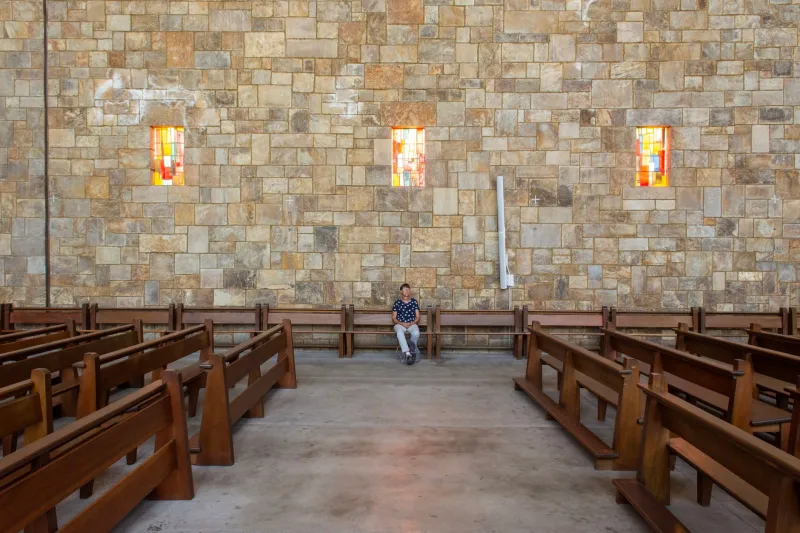
Photo: Evelyn Simak , CC BY-SA 2.0, via Wikimedia Commons
There is a particular kind of silence that settles over a dinner table when a parent realizes their child no longer shares the faith that shaped every morning devotion, every Sunday pew, every bedtime prayer. It is not the silence of peace. It is the silence of something shifting — perhaps permanently.
For many Christian families in Orlando and across the country, this moment arrives without warning. A college student returns home for Thanksgiving and quietly declines to join the blessing. A teenager announces they are no longer sure they believe in God. An adult child stops attending church and begins asking questions that feel, to a grieving parent, like accusations. The temptation in those moments is to respond with urgency — to argue, to plead, or to issue conditions that only widen the distance.
Pastoral counselors who work with Central Florida families urge a different response entirely.
The Grief Is Real — and It Deserves Acknowledgment
Before any parent can respond wisely to a child's departure from faith, they must first give themselves permission to grieve. This is not a small loss. For deeply committed Christian parents, faith is not merely a set of beliefs — it is the framework through which they understand eternity, family, and purpose. When a child rejects that framework, the wound is spiritual, relational, and deeply personal.
Rev. Sandra Morales, a pastoral counselor who has served Orlando-area congregations for more than fifteen years, counsels parents to resist the pressure to respond immediately. "The first conversation should not be the most important conversation," she often tells families. "Your child needs to see that your love is not conditional on their theological agreement. That takes time to demonstrate — it cannot be declared in a single evening."
Scripture itself does not shy away from the reality of spiritual anguish within families. The story of the Prodigal Son in Luke 15 is, at its core, a story about a parent who releases a child into choices that are deeply painful — and who waits, watches, and runs toward reconciliation when the moment arrives. The father in that parable does not chase the son down the road with ultimatums. He lets him go, and he keeps the light on.
Ultimatums Close Doors That Prayer Keeps Open
The instinct to issue an ultimatum — attend church or lose our support, return to faith or face consequences — is understandable, but pastoral counselors and parents who have walked this road consistently warn against it. Ultimatums may produce short-term compliance, but they rarely produce genuine faith, and they almost always damage the relational trust that is the very channel through which spiritual influence flows.
Mark and Diane Calloway, longtime members of a nondenominational congregation in the Orlando area, watched their eldest son walk away from Christianity during his early twenties. "We made every mistake at first," Diane admits. "We argued theology at the dinner table. We sent him articles. We made him feel like a project rather than our son." It was not until they stopped treating his doubt as a crisis to be solved that the conversations began to shift. "We told him we loved him and that our door — and our faith — would always be there. We stopped trying to win debates and started trying to stay in his life."
Several years later, their son has not returned to the church in the way they once hoped. But he attends family worship on holidays, asks genuine questions, and credits his parents' patience as the reason he has not dismissed Christianity entirely.
Asking Better Questions
One of the most practical shifts a parent can make is learning to ask questions rather than deliver answers. When a child expresses doubt, the natural parental impulse is to reassure, defend, or correct. But doubt, at its root, is often a search — and a search requires space to move.
Consider the difference between these two responses to a teenager who says, "I'm not sure I believe in God anymore":
- "You need to pray more and get back into the Word. This is the enemy attacking you."
- "That sounds like it's been weighing on you. What's been making you question things?"
The first response, however well-intentioned, communicates that the parent is not safe to talk to. The second communicates that the child's inner life matters more than winning an argument.
Pastoral counselors often point to the example of Christ Himself, who responded to the struggling, the doubting, and the spiritually displaced not with condemnation but with questions: "What do you want me to do for you?" (Mark 10:51). "Who do you say that I am?" (Matthew 16:15). Jesus invited people into reflection. Parents who follow that model often find that their children continue to engage with faith far longer than those who make belief a condition of belonging.
Maintaining the Relationship Is a Form of Ministry
It bears stating plainly: staying in loving relationship with a child who has left the faith is not a compromise of Christian conviction. It is, in fact, one of the most powerful expressions of it.
The church has sometimes communicated — implicitly or explicitly — that maintaining close ties with someone who has rejected faith amounts to endorsing their choices. But Scripture draws a clear distinction between endorsement and love. The Apostle Paul's instructions in Romans 12 call believers to "live peaceably with all people" and to overcome evil with good — not to withdraw from those whose beliefs differ.
For parents, this means continuing to extend invitations without pressure, celebrating milestones in their child's life without theological conditions, and demonstrating through consistent presence that the family's foundation does not crack under the weight of disagreement.
When to Seek Outside Support
Some families benefit enormously from working with a pastoral counselor or Christian family therapist who can help navigate these conversations with professional skill and spiritual grounding. Several Orlando-area churches offer family ministry resources specifically designed for parents navigating generational faith differences, and organizations such as Focus on the Family provide literature and counseling referrals for those who need additional support.
It is also worth remembering that the parent is not alone in their grief. Many congregations have quietly formed informal communities of parents who share this experience — and the fellowship of those who understand, who pray together, and who refuse to give up hope is itself a profound source of sustenance.
The Long View of Faith
Faith, by its very nature, is not inherited — it is encountered. Each generation must come to it on its own terms, through its own questions, in its own season. The parent's role is not to manufacture belief but to model it faithfully, embody it graciously, and keep the conversation alive long enough for the Holy Spirit to do what no argument ever could.
The door that remains open is the door through which the prodigal may one day return. Keep it open. Keep the light on. And trust that the God who called you has not forgotten the child you love.