Praying Differently, Believing Deeper: What Unanswered Prayers Reveal About the Maturing Soul

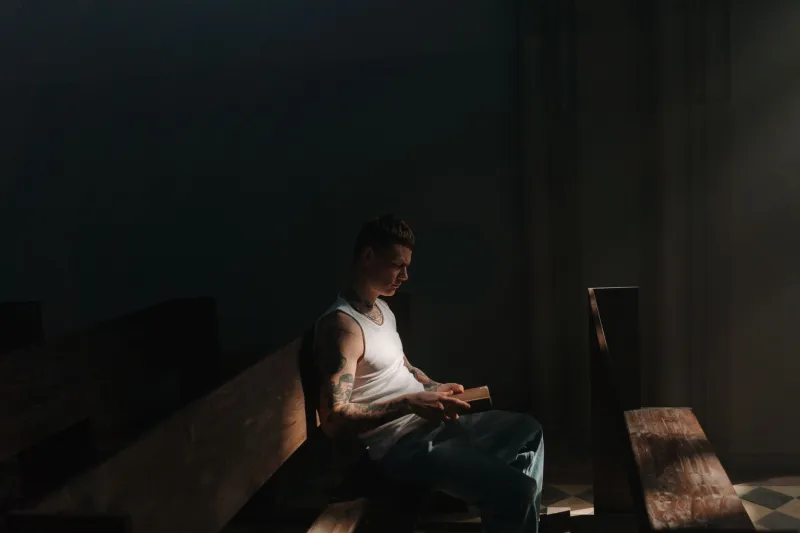
Photo by Photo by Billy Leivon on Unsplash on Unsplash
There is a particular kind of spiritual discomfort that does not announce itself loudly. It arrives quietly, often during a season that looks unremarkable from the outside — a steady job, a functioning family, a Sunday morning pew that remains reliably occupied. Yet something has shifted. The prayers that once rose with confident expectation now feel heavier, more complicated, less certain of their destination. For many believers, this moment produces alarm. They wonder whether their faith is faltering.
But what if the opposite is true?
What if the prayer that changes — the one that moves from petition to lament, from demand to surrender — is not evidence of a weakening spirit, but of one that is finally growing strong enough to hold the full weight of honest communion with God?
The Biblical Architecture of Unanswered Prayer
Scripture does not sanitize the experience of waiting. The Psalms, in particular, form a kind of liturgy of the unanswered — voices crying from wilderness, from exile, from the underside of injustice. Psalm 88 ends without resolution, a rare and deliberate choice that theologians have long noted. The author does not arrive at a tidy conclusion. He simply continues to cry out.
The Apostle Paul, writing to the church at Corinth, described his own repeated petitions for relief from what he called a "thorn in the flesh" — a burden that, by his account, was never removed. What he received instead was a word: My grace is sufficient for you, for my power is made perfect in weakness (2 Corinthians 12:9). Paul's prayer changed. His theology deepened. His faith did not collapse; it was reconstructed on a more honest foundation.
This is not a peripheral theme in Scripture. It is, in many respects, the central one. The life of faith has never been promised as a corridor of answered requests. It has been offered as a relationship — one capable of sustaining confusion, grief, and the long silence of waiting.
Orlando Testimonies: Faith That Survived the Silence
Within the congregations of Central Florida, this experience is neither abstract nor uncommon. Believers from across the Orlando metropolitan area have shared testimonies that reflect a pattern recognizable to anyone who has spent significant time in honest prayer.
One longtime member of a Central Orlando congregation described a decade-long season of praying for the restoration of a fractured marriage. The marriage was not restored. What she describes instead is a transformation of her own interior life — a capacity for compassion she did not previously possess, a willingness to sit with others in their pain without offering easy answers, and a faith that, in her words, "stopped performing and started breathing."
Another believer, a man who had prayed persistently for the recovery of a child from addiction, described the moment his prayers shifted from bargaining to surrender — not as defeat, but as a kind of spiritual clarity he had not known before. "I stopped telling God what the answer needed to look like," he said. "And I started asking Him to be present in whatever was coming."
These are not stories of faith abandoned. They are stories of faith refined.
What Spiritual Maturity Actually Looks Like
The contemporary American church has, at times, inadvertently cultivated a consumer model of prayer — one in which the measure of faith is the frequency of visible results. Testimonies are celebrated when they follow a familiar arc: crisis, petition, resolution. This framework, while not without merit, can leave believers profoundly unprepared for seasons in which the arc does not complete on the expected timeline.
Spiritual maturity, as understood through both the classical Christian tradition and the lived experience of believers, looks considerably different. It is marked not by certainty of outcome, but by constancy of orientation. The mature believer does not pray less — he or she often prays more. But the content of those prayers becomes less transactional and more relational. Questions replace demands. Listening deepens. The silence between prayers becomes less threatening and more inhabited.
Pastor and theologian Eugene Peterson, writing in A Long Obedience in the Same Direction, described the spiritual life as inherently countercultural in its pace — resistant to the urgency and immediate gratification that characterize modern life. The believer who has learned to remain in prayer through unanswered seasons has, in a meaningful sense, learned to live in a different economy altogether.
The Discipline of Staying at the Table
For those currently navigating a season of unanswered prayer, the counsel of the broader Christian community is not to pray harder or to manufacture certainty that does not yet exist. It is, rather, to remain at the table.
This is, in fact, what the great figures of Christian faith modeled across centuries. They did not resolve their questions before returning to worship. They brought their questions into worship. They allowed the liturgy, the community, the Word, and the sacraments to hold them when their own grip on certainty was insufficient.
Local church communities in Orlando are increasingly creating space for this kind of honest spiritual engagement. Small groups designed around lament, prayer gatherings that explicitly make room for the unresolved, and pastoral conversations that do not rush toward resolution — these are among the practices that Central Florida congregations are cultivating in recognition that the people in their pews are carrying questions that deserve more than a formulaic response.
Trusting the Character of the One Who Holds the Answer
Ultimately, the believer who prays through seasons of silence is not praying into a void. Christian faith rests on the conviction that God is not indifferent to human suffering, that His character is trustworthy even when His timing is opaque, and that the relationship between Creator and creature is not contingent on the believer's ability to sustain certainty.
This does not make the waiting easy. It makes it meaningful.
The prayer that changes — that moves from confident petition to honest surrender — is not a lesser prayer. It may, in fact, be the truest prayer a person has ever offered. And the faith that holds through unanswered seasons is not diminished faith. It is faith that has been tested and found sufficient for something far greater than a single answered request: it is faith sufficient for a life lived in genuine communion with God.
For those in the Central Orlando faith community who find themselves in such a season, the invitation remains open. Bring the questions. Bring the silence. Bring the prayers that have changed. The table is large enough to hold all of it.