The Gift That Looks Like a Problem: Redeeming the Church's Most Misunderstood Members
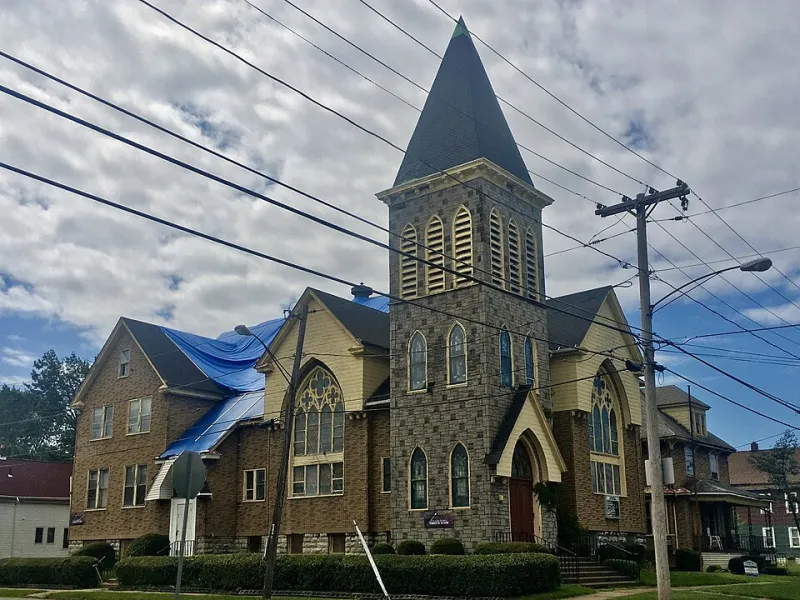
Photo: Andre Carrotflower, CC BY-SA 4.0, via Wikimedia Commons
There is a particular kind of conversation that pastors dread. It usually begins with a well-meaning elder or ministry leader pulling them aside after a Sunday service. The words vary, but the subject rarely does: someone in the congregation is making things difficult. They ask too many questions during Bible study. They push back on leadership decisions in ways that feel confrontational. Their passion in worship unsettles the rows around them. Their creative suggestions disrupt carefully laid plans. The unspoken request is almost always the same — can you do something about them?
What if the more faithful question is this: can we do something with them?
Across Central Florida, a growing number of church leaders are wrestling honestly with a possibility that is both uncomfortable and theologically grounded — that the people most frequently labeled as "difficult" in congregational life may, in fact, be carrying spiritual gifts the church has not yet learned to steward well.
The Tension Between Gifting and Expectation
Scripture is unambiguous about the diversity of gifts distributed throughout the Body of Christ. First Corinthians 12 describes a community in which every member contributes something distinct, and in which the parts that seem less presentable are granted special honor. Romans 12 lists gifts including prophecy, teaching, and exhortation — gifts that, by their very nature, involve speaking into situations with directness and urgency. These are not temperamentally quiet gifts. They are gifts that, exercised without mature discipleship, can feel destabilizing to communities that prize order and consensus.
The problem, suggests Pastor David Harmon of a mid-size evangelical congregation near the Winter Park corridor, is that many churches have unconsciously conflated spiritual maturity with a particular personality type. "We've built our small groups, our volunteer pipelines, and even our preaching culture around a certain kind of measured, cooperative temperament," he said during a recent conversation. "When someone doesn't fit that mold, we assume the issue is their character. We rarely stop to ask whether the issue might be our categories."
This conflation carries real cost — both to the individuals involved and to the congregations that lose them.
Voices From the Margins of the Pew
María Elena Castillo has attended three different Orlando-area churches in the past decade. At each one, she describes the same arc: an initial season of welcome, followed by growing friction as her questions became more persistent and her convictions more vocal, and finally a quiet withdrawal — sometimes her own, sometimes encouraged by leadership. She is not bitter. She is, however, clear-eyed.
"I ask hard questions because I believe the truth can withstand them," she said. "But I've sat in rooms where my questions were treated like an attack on the pastor's authority. After a while, you start wondering if the church actually wants you, or just a version of you that doesn't make anyone uncomfortable."
Her experience is not unique. Thomas Brinkley, a retired engineer who volunteers with a faith-based mentoring program in the Parramore neighborhood, describes a similar pattern. His analytical mind and blunt communication style earned him the informal designation of "troublemaker" in two previous congregations, despite his deep commitment to Scripture and his genuine desire to serve. "I wasn't trying to undermine anyone," he said. "I just couldn't pretend I agreed with something I didn't agree with. Apparently that's a problem."
What both individuals share is not a lack of faith. It is an excess of intensity — an intensity that, properly directed, might serve the Body of Christ in profound ways.
Prophetic Disruption as Spiritual Necessity
The biblical tradition does not treat disruption as inherently suspect. The prophets of Israel were, by any social measure, extraordinarily difficult people. Jeremiah wept publicly and argued with God. Amos confronted the comfortable religious establishment of his day with language that would have cleared a modern church board meeting. John the Baptist was not, by most accounts, easy to be around. Yet each of these figures carried a word the community needed, even when — perhaps especially when — the community did not want to hear it.
This does not mean that every loud or confrontational voice in a congregation carries prophetic authority. Discernment is required. But the reflex to silence intensity before examining its source is a pastoral failure with theological consequences.
Rev. Sandra Okafor, who leads a diverse congregation in the Pine Hills area, has spent years developing what she calls a "gift inventory approach" to conflict resolution. When a congregant is repeatedly identified as difficult, her team's first step is not discipline — it is discernment. "We ask: what is this person's underlying drive? What do they care about most deeply? Where does their energy go when it's not going into friction?" she explained. "Nine times out of ten, we find a genuine gift underneath the behavior. The gift is just unformed, or it's been wounded by previous rejection."
Her congregation has deliberately created what she terms "high-friction roles" — positions in which intensity, questioning, and creative challenge are not merely tolerated but structurally expected. These include a theology discussion group that operates with explicit permission to challenge received positions, a creative arts team that prizes disruption over polish, and a community advocacy team in which passionate conviction is treated as a qualification rather than a liability.
Stewardship, Not Suppression
The goal, it must be emphasized, is not simply to validate difficult behavior in the name of spiritual gifting. Intensity without accountability is not a gift — it is a wound expressing itself. The individual who dominates every conversation, dismisses others' contributions, or pursues personal grievances under the banner of prophetic truth is not exercising a spiritual gift. They are exercising an unhealed self.
The church's responsibility is not to choose between affirmation and correction. It is to do both simultaneously — to name the gift while also providing the relational and spiritual framework within which that gift can mature. This requires pastoral courage and congregational patience in equal measure.
For María Elena, the breakthrough came when a pastor finally sat across from her and said something she had never heard in a church setting: "I think you're called to ask hard questions. Let's figure out how to make that a ministry instead of a problem." She now leads an apologetics-focused outreach at her current congregation, equipping young adults to engage skeptics with both intellectual rigor and genuine grace.
For Thomas, it was a mentor who helped him see that his directness, channeled toward accountability structures rather than interpersonal conflict, could serve his congregation's integrity. He now chairs a financial oversight committee where his analytical frankness is, as he puts it, "finally the right tool for the job."
A Church Capacious Enough for Its Own Members
The Body of Christ, as Paul describes it, is not a collection of interchangeable parts performing identical functions. It is an organism of deliberate, Spirit-designed diversity — diverse in background, in temperament, and in gifting. A congregation that can only accommodate one personality type is not a fully functioning body. It is a body in which certain members have been told, in ways explicit or implicit, that they do not quite belong.
Orlando's faith communities have an opportunity to model something different — a kind of congregational life that is genuinely capacious, that holds intensity and gentleness together, that treats the most challenging voices not as problems to be managed but as gifts to be developed.
The difficult person in your congregation may be the very instrument God intends to use. The question is whether your church is willing to do the harder, slower, more faithful work of finding out.