Raising Seekers: How Orlando Parents Are Turning Their Children's Doubts Into Deeper Faith

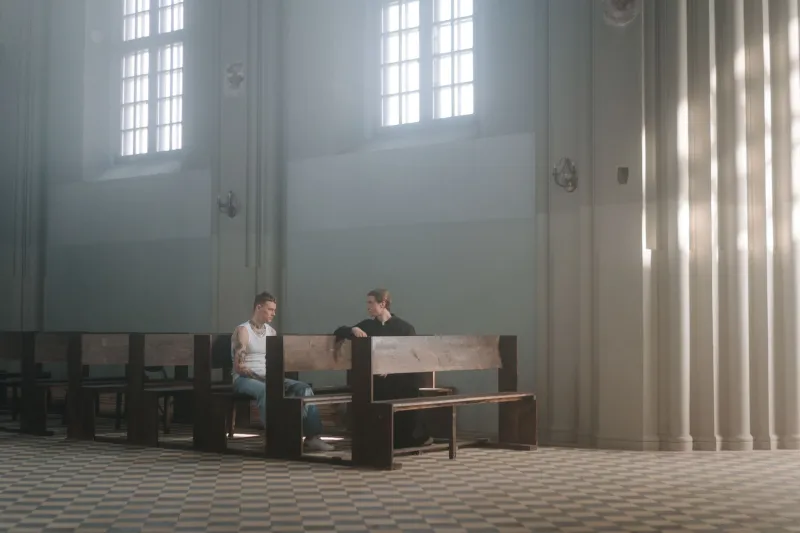
There is a particular kind of silence that falls over a dinner table when a teenager says, for the first time, "I'm not sure I believe any of this anymore." For Christian parents who have poured years of Sunday school attendance, family devotions, and faithful church membership into their children, those words can feel like a small earthquake. The instinct to correct, to reassure, or even to panic is understandable. But pastoral experience and the testimonies of Orlando-area families suggest that how a parent responds in that moment may shape a young person's spiritual trajectory far more than any sermon or curriculum ever could.
At Central Christian Doc Orlando, we have had the privilege of sitting with families in exactly this kind of tension. What follows is not a formula for keeping children in the faith by force of argument, but rather a reflection on the kind of patient, prayerful engagement that honors both the God who invites honest seeking and the young people He has placed in our care.
The Difference Between Doubt and Departure
Before a parent can respond well, it helps to understand what their child is actually expressing. Doubt and departure are not the same thing. A teenager who says "I have questions" is not the same as one who has made a settled decision to walk away from the Christian faith. In fact, many of the most theologically grounded adults in our congregation trace the beginning of their mature faith precisely to a season of adolescent questioning.
C.S. Lewis, himself a famous convert who wrestled deeply with unbelief before arriving at faith, once observed that a man who has never doubted has perhaps never truly believed. That is not to romanticize skepticism, but to recognize that genuine faith must eventually become one's own — not simply inherited from parents or absorbed through cultural proximity to the church.
Pastoral counselors who serve Central Florida families frequently note that the adolescent years are, by design, a period of identity formation. Young people are not simply questioning their parents' religion; they are beginning the lifelong work of determining what they themselves believe, value, and trust. When that process is met with fear or rigidity, it often drives honest questions underground — where they fester rather than resolve.
Creating a Home Where Questions Are Welcome
One Orlando mother, whose teenage son began expressing doubts during his sophomore year of high school, described her initial reaction as "pure dread." She had done everything she believed she was supposed to do: raised him in church, read Scripture with him at bedtime, enrolled him in a Christian school. When he told her he wasn't sure God was real, she felt as though she had failed.
"My first instinct was to hand him a book and tell him to read it," she recalled. "But our pastor encouraged me to just listen first. To ask him what he was actually struggling with before I started defending anything."
That shift — from defender to listener — proved to be the turning point. Over the following months, her son's questions moved from broad skepticism to something more specific: he was troubled by the problem of suffering, by what he perceived as hypocrisy among Christians he knew, and by the cultural pressure he felt from peers who viewed faith as intellectually unsophisticated. These were not questions without answers. But they required a parent willing to hear them fully before offering a response.
Creating this kind of environment at home does not mean abandoning convictions. It means modeling the confidence of a faith that can withstand scrutiny. Parents who respond to their child's doubt with anxiety inadvertently communicate that Christianity is fragile — that it cannot hold up under examination. Parents who respond with curiosity and steadiness communicate something far more powerful: that the truth does not need to be protected from honest questions.
Engaging the Questions With Intellectual Seriousness
Many of the doubts young people bring home from college campuses, high school classrooms, or social media feeds are not new. They are variations on questions that brilliant Christian thinkers have engaged for centuries. The problem of evil, the reliability of Scripture, the exclusivity of Christ — these are weighty matters, and they deserve weighty engagement.
This is where the local church has an irreplaceable role to play. Families do not have to navigate this terrain alone. Central Christian Doc Orlando and congregations across the greater Orlando area offer resources — from apologetics classes to small groups specifically designed for young adults in spiritual transition — that equip both parents and their children with the intellectual tools to engage doubt honestly.
Fathers and mothers need not have every answer. What they do need is a willingness to say, "That is a serious question, and it deserves a serious answer. Let us look into it together." That kind of intellectual humility, modeled by a parent, does more to preserve a child's faith than a perfectly rehearsed theological argument delivered in a moment of fear.
The Long View of Spiritual Formation
Perhaps the most important counsel for parents in this season is simply this: take the long view. Faith formation is rarely linear. The young person who walks away from church at eighteen and returns at twenty-six with a faith far more durable than the one they left behind is not an uncommon story in Christian communities. The prodigal son, after all, came home.
This does not mean parents should be passive. Continued prayer — fervent, specific, persistent prayer — is not a last resort but a first response. Maintaining the relationship, even when theological agreement is absent, keeps the door open. Continuing to live visibly and consistently as a person of faith, without weaponizing that faith against a questioning child, demonstrates that Christianity is not merely a set of propositions but a way of life rooted in genuine love.
One Central Florida father put it simply: "I told my daughter I wasn't going to stop loving her because she had questions. And I told her I wasn't going to stop praying for her either. I just kept showing up — at her games, at dinner, in her life. And eventually, she started showing up at church again."
A Church That Walks With Families
At Central Christian Doc Orlando, we believe that the local church exists not only for Sunday mornings but for precisely these kinds of weekday crises of faith. If your family is navigating a season in which a young person has begun to question the beliefs they were raised with, you are not alone, and you have not failed. You are in the company of faithful parents throughout Christian history who have discovered that the God who is big enough to create the universe is also patient enough to pursue a doubting teenager.
We invite you to reach out to our pastoral team, to attend one of our family discipleship resources, or simply to sit with us and talk. The questions your child is asking may feel like a threat. In the hands of a wise and gracious God, they may yet become the very thing that anchors their faith for a lifetime.